Today, Saturday 22 November 2025, marks Equal Pay Day in the UK, the day in the year when, on average, women’s pay would run out if they were paid the same hourly rate as men.
Equal pay has been a legal requirement in the UK since the introduction of the Equal Pay Act in 1970, with further measures added in 2017 requiring employers with more than 250 employees to publish their gender pay gap data. Despite all of these measures designed the address inequality, the gender pay gap remains difficult to close.
The gender pay gap reporting by Statista, based on official data and reputable sources, shows that in 2025 the difference in average hourly pay between men and women in the UK was 12.8%.
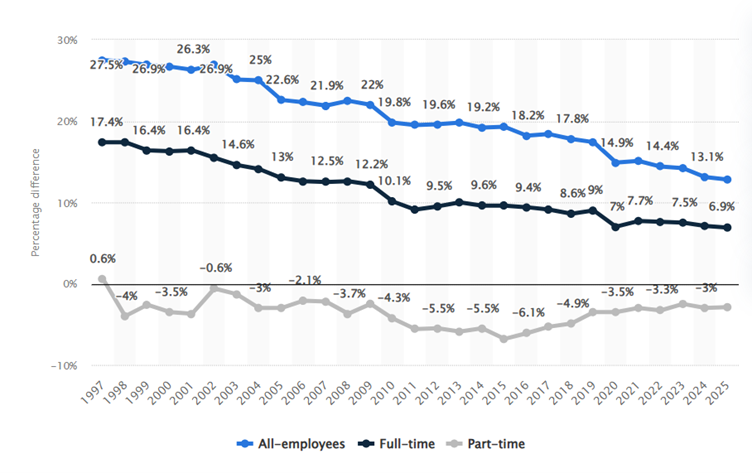
Statista. (2025). UK gender pay gap 2025. Available here.
The pay difference is generally caused by women’s part time work, which limits career progression, career breaks to care for children or elderly family members, discrimination and gender bias in hiring, promotion and salary negotiation.
The impacts of the gender pay gap are lifelong and their effects become even more noticeable as women approach retirement. As per Statista, the gender pay gap for people in their 50s is 12.1% and the gender pay gap for people in their 60s has only reduced by 1.2% in the last 25 years. This disparity leads to older women finding themselves more financially vulnerable, sometimes having to work until later in life, in many cases through ill health and being unable to enjoy the last years of their lives.
Closing the gender pay gap in not only a matter of fairness, but it also has the potential to seriously impact on women’s security and wellbeing later in life. While actions from employers to close the gender pay gap are welcome, women are encouraged to pursue equal pay for equal work and flexible working arrangements as these steps empower their careers now and also help their financial future.
If you believe to be impacted by unequal pay or face challenges with flexible working arrangements, I encourage you to contact the PDA Member Support Centre for advice tailored to your personal circumstances. The PDA’s dedicated team of employment solicitors and workplace representatives have vast experience in dealing with unequal pay and supporting pharmacists facing discrimination.

By Daniela Rusalim pharmacist advanced practitioner and Vice-President of the PDA NAWP Network
Get involved
- Follow the PDA NAWP Network on social media using the hashtag #PDAnawp
- For more information about the PDA NAWP Network, click here.
- If you would like to get involved with the network and its activities, please email: [email protected]
- Join the PDA NAWP Network.
Learn more
- Fawcett Society – Equal Pay Day – Campaign Archive
- Gender pay gap for median gross hourly earnings in the United Kingdom from 1997 to 2025
Not yet a PDA member?
If you have not yet joined the PDA, we encourage you to join today and ask your colleagues to do the same.
Membership is FREE to pharmacy students, trainee pharmacists, and for the first three months of being newly qualified.
Read about our key member benefits here.